


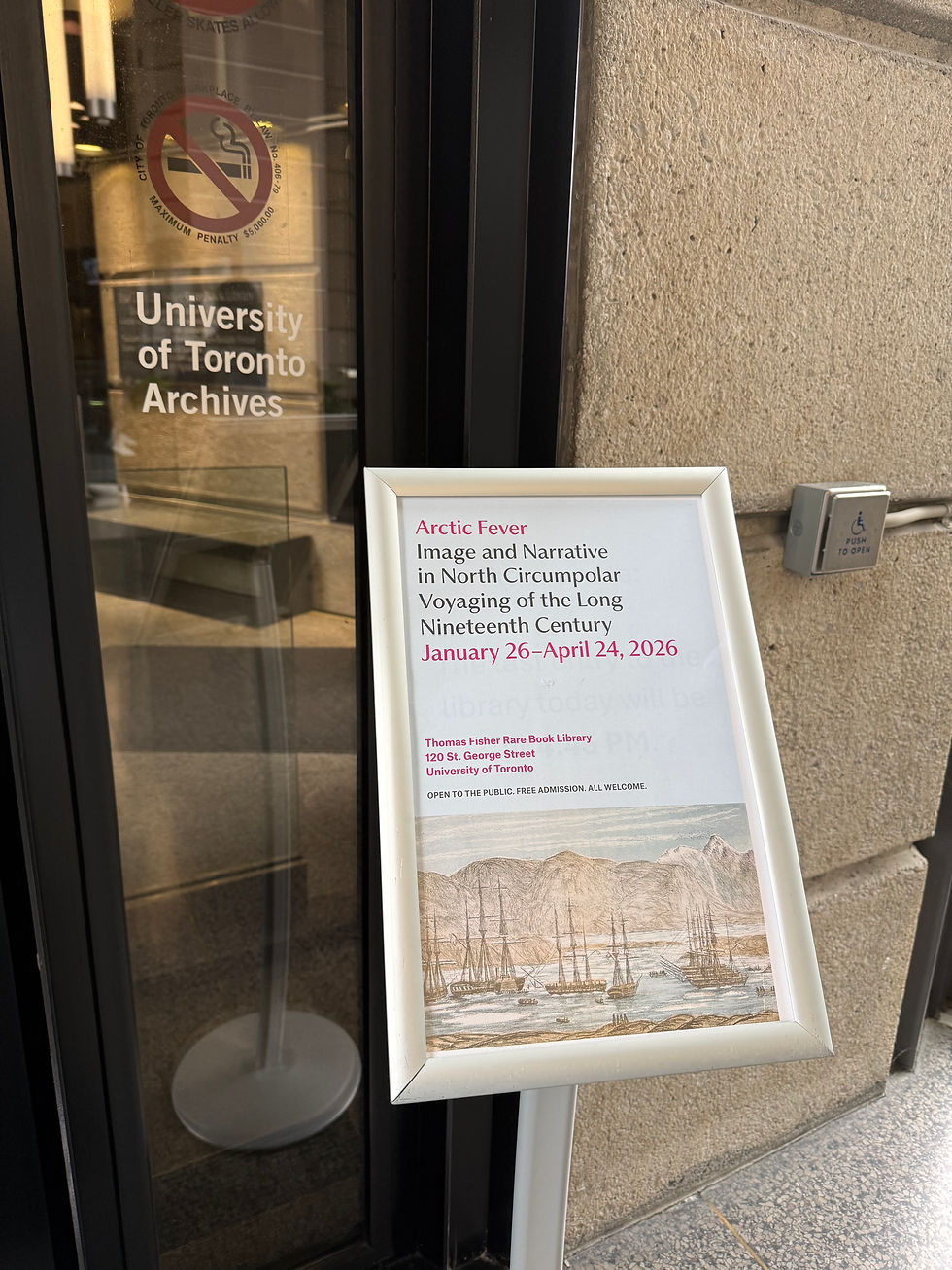
Arctic Fever @ Thomas Fisher Rare Book Library

I recently visited an exhibition that rewards slow and attentive viewing — Arctic Fever: Image and Narrative in North Circumpolar Voyaging of the Long Nineteenth Century.
The exhibition examines nineteenth-century Arctic exploration through the relationship between image and text, showing how the polar regions were both observed and represented. Alongside navigational records and scientific materials, it features shipboard newspapers, theatrical playbills, illustrated books, and various forms of printed ephemera.
What stood out most was the role of print within such an extreme environment. Initially introduced as a means of transmitting rescue messages, printing gradually became part of everyday cultural life on board: used for documentation, entertainment, and sustaining rhythm and morale during long periods of isolation. These materials, not originally intended for preservation, have since become valuable entry points into understanding the historical experience of Arctic voyages.
The exhibition also highlights how different media collectively shaped perceptions of the Arctic: from stereoscopic viewing devices, to politically inflected prints, to modes of recording and representing Indigenous peoples. Each form carries its own perspective, reminding us that “seeing” is never neutral.
I also purchased the exhibition catalog, which I found particularly rewarding. Thoughtfully structured and well-paced, it offers both depth and readability, functioning less as a supplement to the exhibition and more as an extension of it—something to return to over time.
For those interested in book history, visual culture, or the ways in which texts shape modes of perception, this exhibition is well worth spending time with.




Comments